


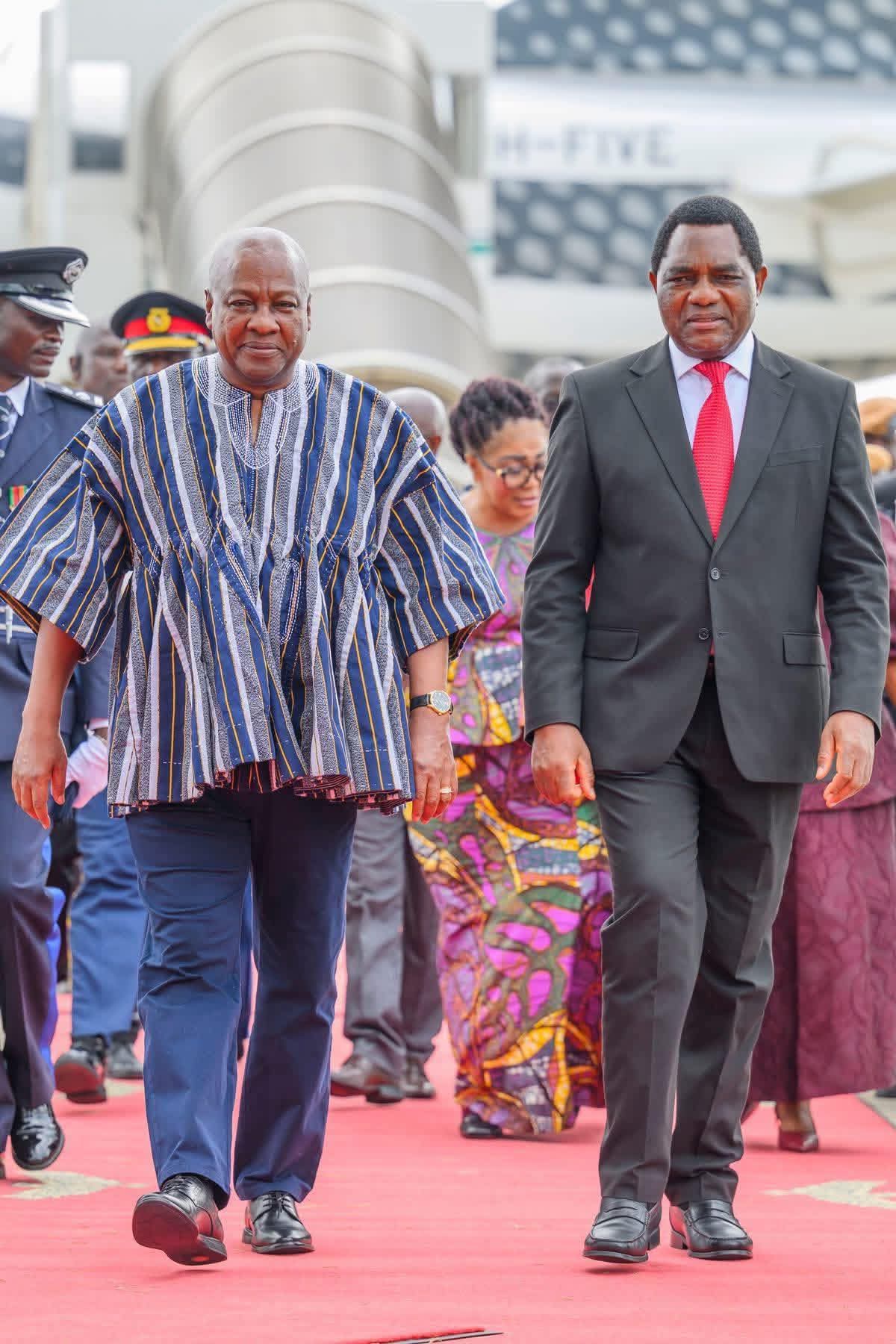
A social media users from Ghana and Zambia are at each others throats after some Zambians mocked the traditional outfit worn by President John Mahama during an official visit to Zambia.
The criticism followed the circulation of photographs showing Mr Mahama dressed in a traditional Ghanaian smock, known locally as fugu or batakari, during his three-day state visit.
Some Zambian netizens referred to the garment as a “blouse”, comments that many Ghanaians described as disrespectful and culturally insensitive.
In response, Ghanaians took to social media to share their opinions, defending the president.
Here is what you need to know about the elegant attire worn by the President.
When you come to Ghana, Fugu or Batakari are iconic symbols of culture, identity, and style, particularly in northern part of the country.
These handwoven garments, once reserved for chiefs and elders, are now celebrated across the country and beyond.
What is Fugu?
Fugu, also known as the smock, is a handwoven cotton fabric distinguished by its loose-fitting design and bold striped patterns.
Traditionally, it was a symbol of status, respect, and leadership, often worn by chiefs, elders, and important community figures.
Now, Fugu has evolved beyond its ceremonial roots.
What is Batakari?
While often used interchangeably with Fugu, Batakari refers specifically to the garment made from the Fugu fabric.
Typically sleeveless or short-sleeved, Batakari is often paired with matching trousers and forms a staple in the wardrobe of northern Ghanaian men.
Batakari’s thick cotton threads provide comfort and durability.
Where can I wear my Fugu or Batakari?
One can wear the elegant attire to any occasion, being it festivals, cultural celebrations, weddings, funerals, chieftaincy durbars, and even religious ceremonies.
The attire now appeal to younger generations and international audiences.
Fugu and Batakari have made appearances on fashion runways, in corporate events, and even in international media, symbolizing Ghanaian pride and creativity.
Beyond the beauty of it, Fugu and Batakari serve as powerful cultural markers.
They communicate respect for heritage, and sense of belonging.
They are the pride of Ghana that speaks without words.
By Abigail Grit