

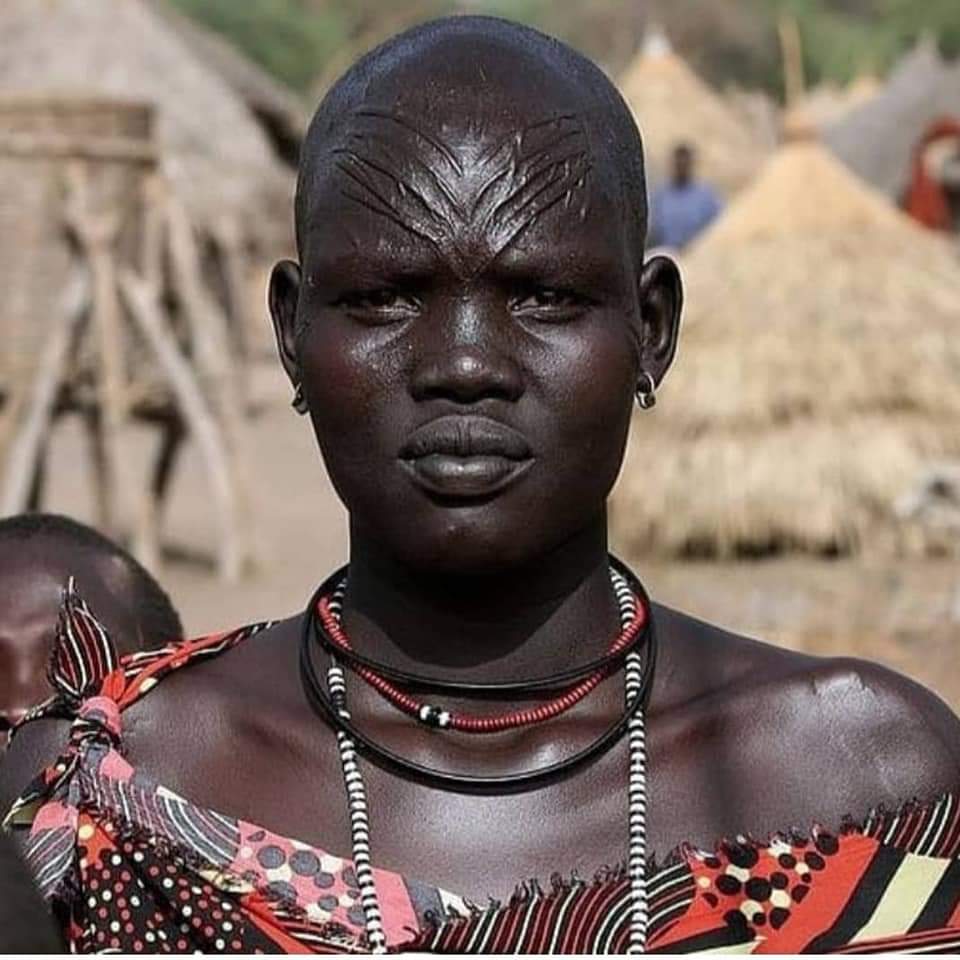
Across parts of Africa, scarification has long been used as a cultural practice to mark identity, ancestry and life experience. Although its prevalence has declined in many regions, it continues in some communities as a symbol of heritage and belonging.
The practice involves cutting the skin in controlled patterns so that, as it heals, raised scars form. Unlike tattooing, which uses ink, scarification creates permanent designs through changes to the skin itself.
Anthropologists say such markings have historically served as social identifiers, indicating family ties, geographic origin, and in some cases life stage or status.
Yoruba communities in West Africa
Among some Yoruba communities in south-west Nigeria and neighbouring Benin and Togo, facial scarification marks known as “ila” were traditionally used to indicate lineage, ancestry or place of origin.
Different patterns could identify specific families, towns or subgroups.
However, the practice was never universal and was not required for belonging to Yoruba society. Today, it is rare and no longer considered a cultural expectation.
Hausa and Fulani communities
In parts of Nigeria, Niger and surrounding regions, some Hausa and Fulani groups historically used facial marks to identify family lineage or regional origin.
These markings varied widely between communities and were never practiced uniformly across all Hausa or Fulani people.
The tradition has declined significantly in recent decades due to changing social norms, urbanisation and religious interpretations in some areas.
Ethiopia’s Omo Valley communities
In Ethiopia’s southern Omo Valley, scarification practices differ between ethnic groups and carry varied meanings.
Among the Dassanech, markings have traditionally been linked to identity, aesthetic values and life experience, rather than being a record of combat or killing.
The Mursi, known internationally for lip plates, have also used scarification in some contexts as a form of cultural expression and identity, although it is not their most prominent cultural feature.
The Dinka of South Sudan
Among the Dinka, scarification has traditionally formed part of initiation rituals marking the transition from childhood to adulthood, particularly for males.
Forehead markings are associated with endurance and acceptance of pain during initiation ceremonies.
While still present in some areas, the practice has declined in others due to education, urbanisation and changing cultural and religious influences.
A declining but continuing practice
Scarification has become far less common across many African societies, particularly in urban settings.
However, it has not disappeared entirely. In some rural communities, it continues as a marker of identity, heritage and tradition, while elsewhere it survives mainly as a historical practice.


