

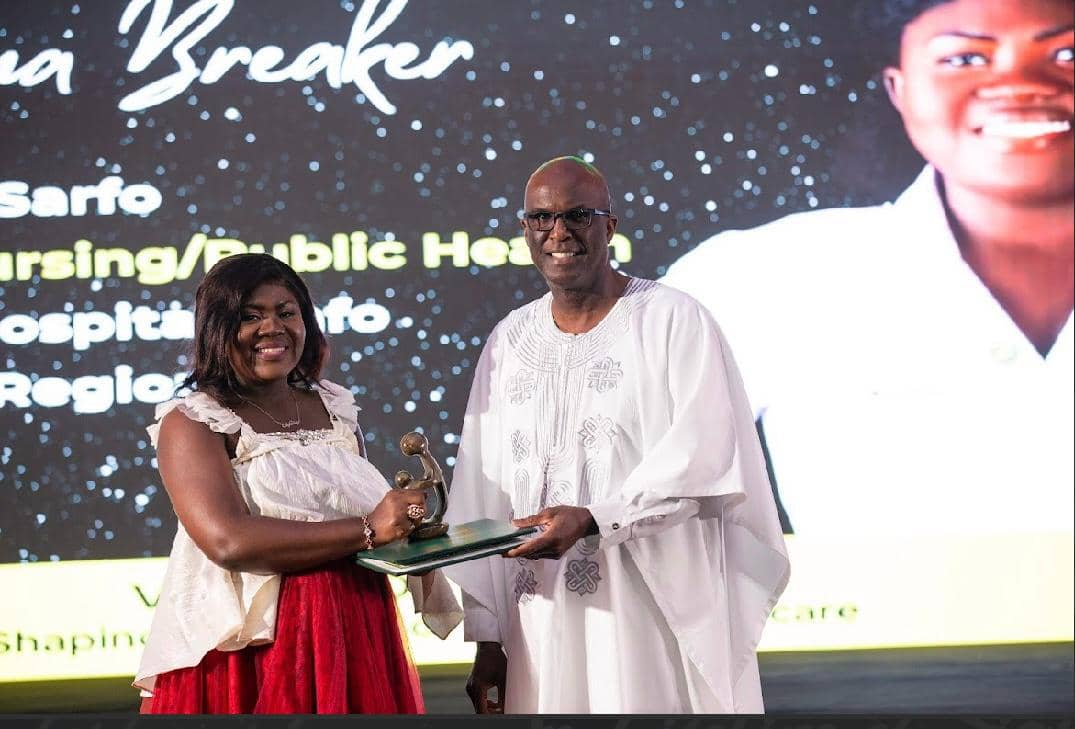
With more than seven years of experience in nursing, Public Health and Community Health Nurse Esther Sarfo has built her career around bringing preventive healthcare, health education and patient support closer to the communities she serves.
Based at Powerhouse Hospital and working closely with the Old Tafo community in Kumasi, Sarfo has been involved in breast cancer awareness and screening, hypertension advocacy, among others.
In an exclusive interview with the Ghanaian American Journal, Sarfo reflects on her journey in nursing, the importance of prevention and patient-centred care, and her efforts to empower individuals and communities to make informed decisions about their health.
GAJ: What inspired you to pursue nursing?
ESTHER: My desire to serve people and make a meaningful difference in their lives. I have always believed that healthcare is not only about treating people when they become sick, but also about preventing illness, promoting healthy lifestyles and empowering individuals and communities to take responsibility for their health.
My journey has therefore taken me beyond the hospital environment into communities, schools, homes and other spaces where people live and make decisions about their health. Working directly with people has strengthened my conviction that nursing is both a profession and a calling to serve humanity with compassion, knowledge and commitment.
GAJ: What are some of the most significant initiatives, activities or interventions you have personally undertaken in your work as a community health nurse?
ESTHER: One initiative I am particularly proud of is my involvement -in breast cancer screening and awareness, where I participated in community education and screening activities that reached and screened over 100 people.
The intervention was not simply about screening; it was about helping people understand the importance of early detection and overcoming fear and misconceptions surrounding breast cancer.
I have also been actively involved in hypertension advocacy, adolescent and sexual and reproductive health education, family planning promotion, HIV screening and community outreach.
More recently, I have expanded my advocacy to areas such as climate and health, mental health and community resilience, because I believe the future of public health requires us to address the wider social and environmental factors that influence people’s wellbeing.

GAJ: What are some of the health challenges you have identified in the communities you serve, and how have you personally responded to them?
ESTHER: Some of the major challenges I have observed include inadequate health information, misconceptions about diseases, late presentation, limited uptake of preventive services, financial barriers and stigma.
I have responded by taking health education closer to the people through community outreach, home visits, screening programmes, school health activities and one-on-one counselling.
Rather than waiting for people to develop complications from hypertension, I have participated in awareness and screening activities that encourage early detection and lifestyle modification.
My approach is simple: meet people where they are, understand the barriers they face, provide information they can understand and support them to make informed health decisions.
GAJ: How do you approach health education and awareness in communities where misconceptions, stigma or traditional beliefs may affect people’s health decisions?
ESTHER: People’s beliefs are often shaped by their families, culture and experiences. If we immediately dismiss those beliefs, we may lose the opportunity to influence them. I therefore listen first, identify the misconception and then provide accurate information in a language and manner that people can understand. I use practical examples, storytelling, demonstrations and opportunities for questions and discussion.
Most importantly, I avoid making people feel ashamed about what they believe. My goal is to build trust and help them understand why a particular health decision may be safer or more beneficial.
I believe effective health education is not about talking at people; it is about having meaningful conversations with them.

GAJ: Can you share an experience where your intervention made a meaningful difference in someone’s life?
ESTHER: One experience that has remained particularly meaningful to me was caring for a patient who was going through a difficult and vulnerable period. Beyond providing the required clinical care, I took time to listen to the patient, understand concerns and offer reassurance and emotional support.
I realised that the patient needed more than just the clinical intervention. He needed someone who would listen without judgement, communicate with compassion and make him feel valued and cared for. I therefore made a conscious effort to ensure that the patient felt supported throughout the care process and that his concerns were not overlooked.
What touched me most was seeing how that simple act of compassion changed the patient’s experience. It reminded me that, as nurses, the way we make people feel can be just as important as the care we provide.
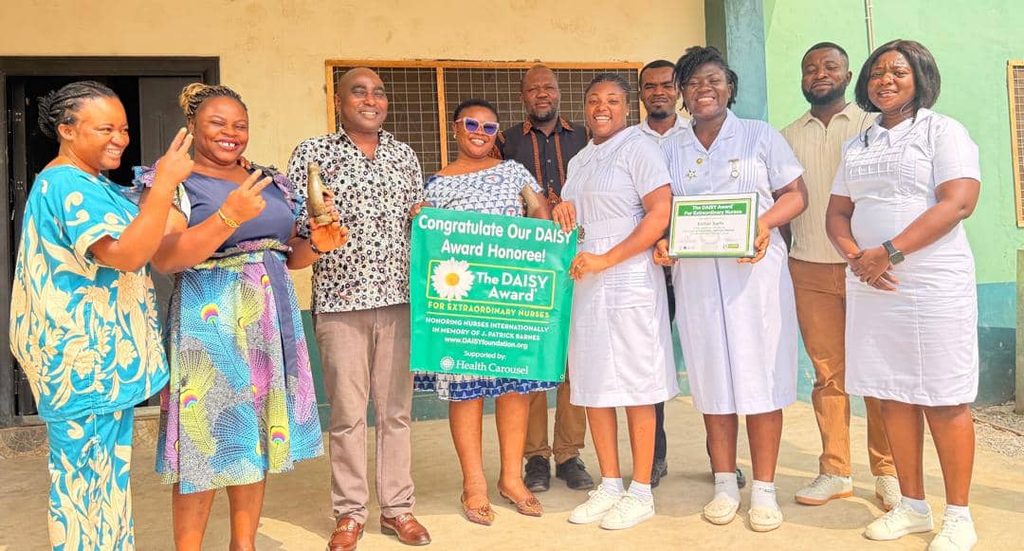
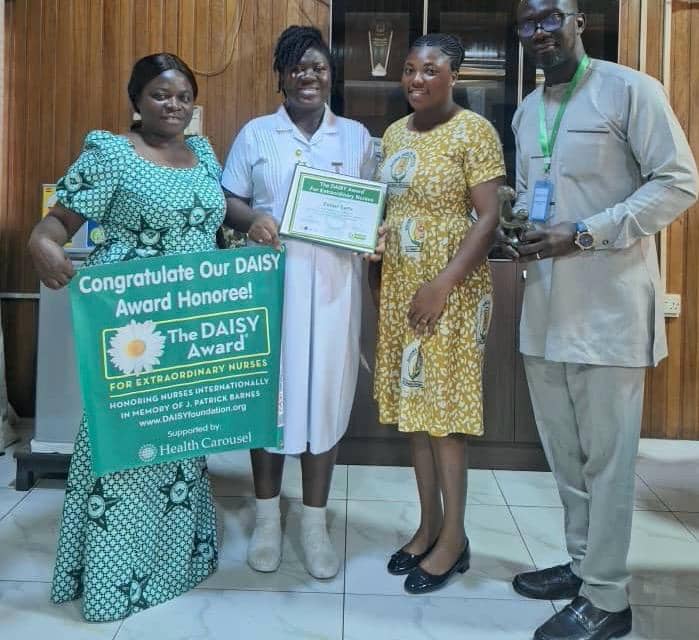
Being recognised with the DAISY Award for compassionate nursing reinforced this belief for me. It affirmed that small acts of kindness, empathy, advocacy and going the extra mile can have a lasting impact on a patient and their family.
That experience continues to remind me that nursing is not only about treating a condition; it is about caring for the person behind the condition, preserving their dignity and making them feel seen, heard and valued.
GAJ: What has been the most challenging aspect of your work, and how did you overcome those challenges?
ESTHER: You can provide accurate information, but people may still hesitate to act because of fear, misinformation, cultural beliefs or previous experiences with healthcare.
I have learned to be patient and consistent. I listen, build relationships and adapt my communication approach rather than expecting everyone to respond in the same way.
I have also learned that teamwork is essential. Public health outcomes cannot be achieved by one nurse alone. Collaboration with colleagues, community leaders, families and other stakeholders makes interventions more effective and sustainable.
GAJ: What have you learned from working directly with patients and communities that has shaped you as a nurse?
ESTHER: I have learned that every patient has a story.
Two people may have the same diagnosis but completely different circumstances, fears, resources and support systems. This has taught me to look beyond the diagnosis and understand the person. I have also learned that compassion is a clinical skill. The way we communicate, listen and treat people can influence their willingness to seek care and follow health advice.
Most importantly, community nursing has taught me that prevention is powerful. Sometimes the greatest success is preventing a person from becoming seriously ill in the first place.
GAJ: You have been nominated for the Ministry of Health 2026 Nursing and Midwifery Excellence Awards under the Clinical Excellence category. What does this recognition mean to you?
ESTHER: I see the nomination not only as a personal achievement but as recognition of community and public health nursing and the important role nurses play in prevention, early detection, patient education and continuity of care.
I am deeply honoured by the nomination, and I see it as an encouragement to continue serving with competence, compassion, integrity and purpose.


GAJ: Looking ahead, what more do you hope to accomplish?
ESTHER: I hope to expand my work in community health education, preventive screening, adolescent health, maternal and child health, climate and health, mental well-being and health advocacy.
I also want to contribute more to research, policy and evidence-based interventions so that community experiences can inform decisions at higher levels.
Ultimately, I want my legacy to be that I helped people become more informed and empowered about their health.
For me, nursing is not only about caring for people when they are sick, it is about empowering people to live healthier lives and creating healthier communities.
Thank you
GAJ: Thank you for making time to share your journey with us.


