

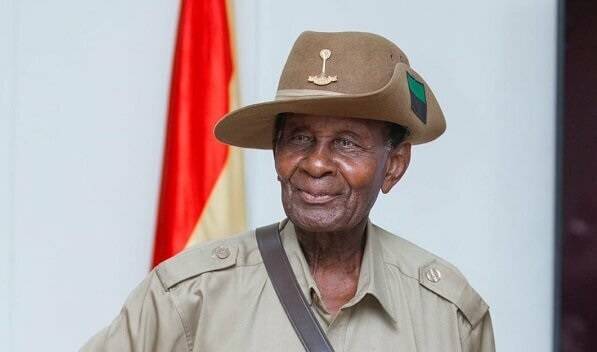
As the world marks Remembrance Day on 11 November, Ghana remembers the men who fought in distant battlefields during the two World Wars.
Their sacrifices went beyond military service. For some, the experience of war became part of a bigger struggle for justice, dignity and Ghana’s independence.
Among them were Joseph Ashitey Hammond, a surviving veteran of the Burma Campaign, and Ex-Sergeant Samuel Kenneth Num, who served in the Second World War before dedicating his life to education, community development and veterans’ welfare.
Their stories highlight the courage and contributions of Ghanaian soldiers who served under British colonial rule and continued to serve their country after returning home.
Joseph Ashitey Hammond: From Burma to Ghana’s independence struggle

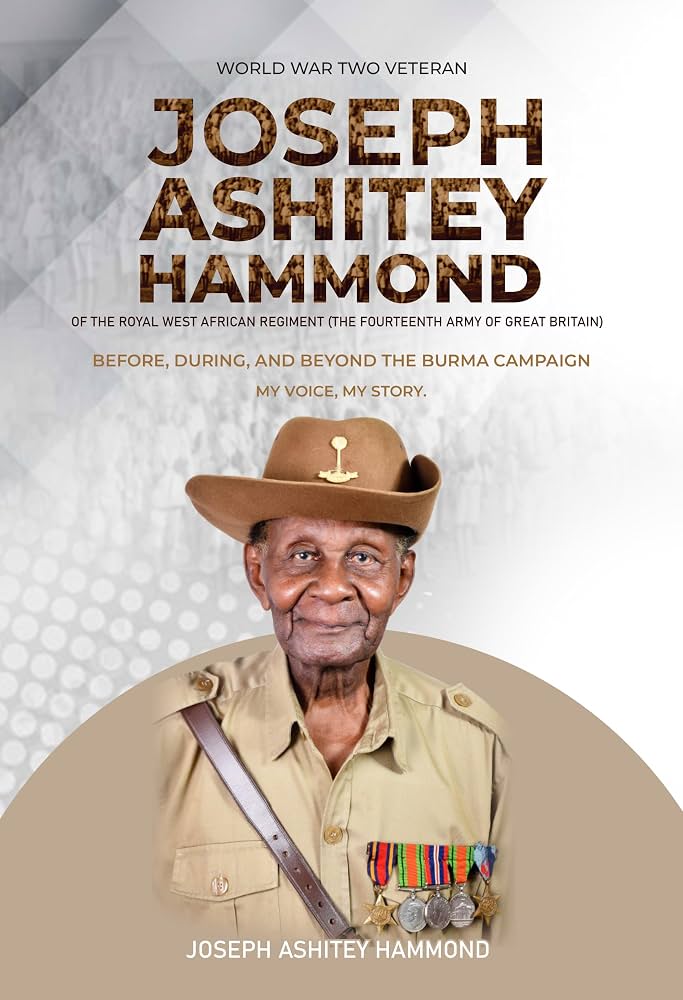
Joseph Ashitey Hammond is one of Ghana’s remarkable surviving veterans of the Second World War.
Born in 1925, he joined the Gold Coast Regiment of the Royal West African Frontier Force (RWAFF) on 31 July 1943. According to his own account, he was about 16 years old when he enlisted.
He initially received mechanical training and was posted to Takoradi, where he worked as a mechanic.
He was later deployed overseas with the 3rd Battalion of the Gold Coast Regiment, which served as part of the 82nd West African Division during the Burma Campaign.
The Burma Campaign was one of the toughest theatres of the Second World War. Allied forces fought Japanese troops across difficult jungle terrain and mountainous areas in present-day Myanmar.
Hammond’s work involved maintaining and repairing military vehicles, particularly jeeps used to transport troops, equipment and supplies.
During the campaign, his battalion experienced intense fighting. He later developed an eye infection and was sent to India for treatment, where he remained until the end of the war.
He returned to the Gold Coast in December 1945 and was demobilised in January 1946.
On 28 February 1948, Hammond joined fellow ex-servicemen in a march towards Christiansborg Castle in Accra to present a petition to the colonial Governor, Sir Gerald Creasy.
The veterans were demanding outstanding gratuities, pensions and other benefits they believed they were owed for their wartime service.
The march ended in tragedy when colonial police opened fire at the Christiansborg Crossroads, killing three former servicemen: Sergeant Cornelius Frederick Adjetey, Corporal Patrick Attipoe and Private Odartey Lamptey.
Hammond survived the shooting.
The incident became an important turning point in Ghana’s independence struggle, increasing public anger against colonial rule.
Even after the war, Hammond remained committed to serving his country.
During the COVID-19 pandemic in 2020, he undertook a fundraising walk to support frontline health workers and vulnerable veterans.
In recognition of his contributions, President Nana Addo Dankwa Akufo-Addo conferred on him the honorary rank of Warrant Officer Class One on 20 July 2020.
His life remains an important link between Ghana’s participation in the Second World War and the country’s journey to independence.
Ex-Sergeant Samuel Kenneth Num: The soldier who became an educationist

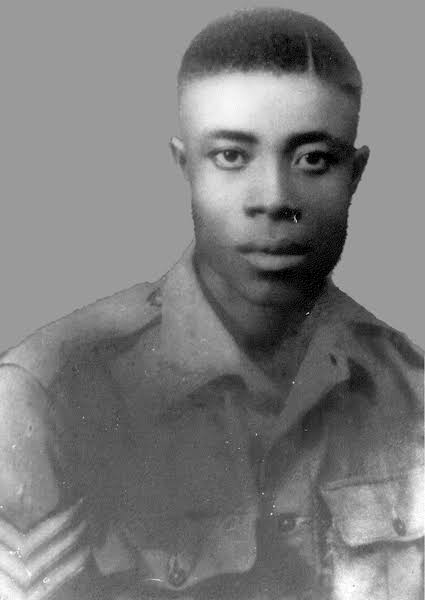
Ex-Sergeant Samuel Kenneth Num was another Ghanaian whose wartime experience did not end his commitment to public service.
Born on 17 August 1917 at Wechi, in the then Western Asante area of the Gold Coast, now part of the Bono Region, Num served in the British colonial army before pursuing a career in education and local government.
He enlisted on 25 September 1940 and was posted to the 7th Battalion of the Gold Coast Regiment at Kintampo.
He later rose to the rank of Sergeant and served as an orderly room clerk under military service number GC 24198.
In 1943, his battalion was deployed to India in connection with the Burma Campaign, where Allied forces fought Japanese troops.
Num’s wartime experience was marked by a tragic incident.
In an account of his military service, he recalled how a patrol of 12 soldiers came under attack and was surrounded by enemy forces.
As they attempted to escape through marshy terrain, eight soldiers drowned. Only four survived, including Num.
The experience reportedly haunted him for more than a decade.
After returning home, Num turned his attention to education.
He trained at Kumasi Wesley College between 1947 and 1951 and later taught in several Methodist schools.
In January 1952, he was unanimously elected chairman of the Wenchi Local Area Council.
During his tenure, he supported educational development and improvements in local infrastructure. His administration was associated with the establishment of several primary and middle schools.
He later served as chairman of the Interim Management Committee of the Wenchi Local Council from 1968 to 1972.
Num also played an important role in supporting former servicemen.
In 1978, he was unanimously elected Regional Chairman of the Veterans Association of Ghana for the then Brong Ahafo Region, serving until 1981.
During his leadership, he initiated projects to improve the association’s facilities.
These included the construction of 14 guest rooms in Sunyani, a recreational hall and a canteen.
He also worked with regional authorities to improve the surroundings of the Cenotaph.
His efforts helped promote the welfare and social activities of former servicemen.

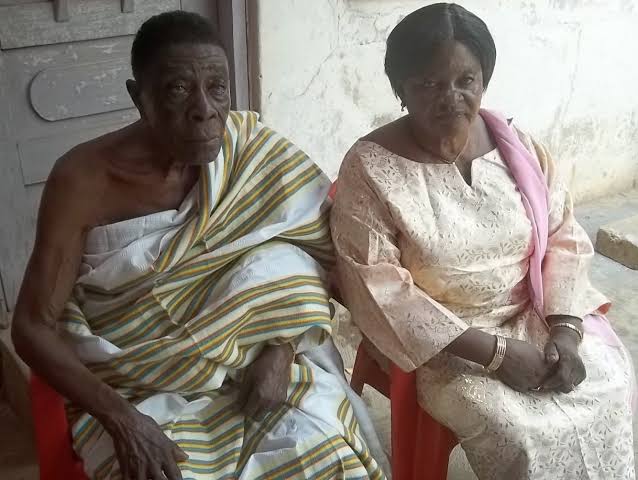
Num’s dedication to education earned him recognition from the Ghana National Association of Teachers (GNAT).
On 1 October 1981, he received a National Meritorious Service Award during the association’s Golden Jubilee celebrations.
The award recognised his contribution to the teaching profession and his commitment to education.
His journey from soldier to teacher and community leader demonstrated his dedication to national development.
The stories of Joseph Ashitey Hammond and Samuel Kenneth Num remind Ghanaians of the sacrifices made by thousands of soldiers who served in the two World Wars.
Many fought far from home, particularly during the Burma Campaign, under difficult and dangerous conditions.
But their struggles did not end when they returned. Questions about pensions, gratuities and other benefits brought many ex-servicemen into conflict with the colonial administration.
The killing of three veterans during the February 1948 march in Accra became a defining moment in Ghana’s history.
Although Hammond and Num followed different paths after the war, both continued to contribute to their country.


