


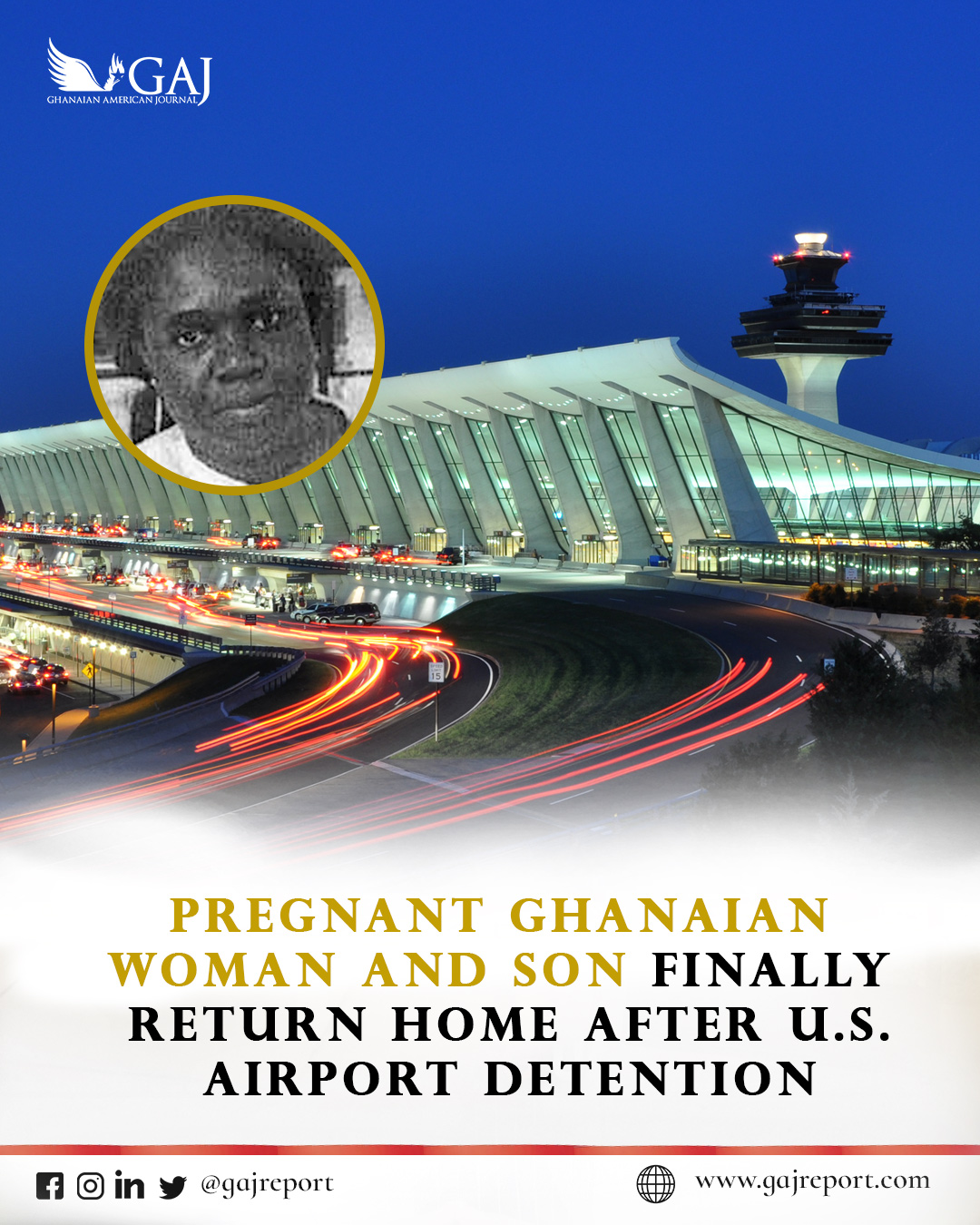
A pregnant Ghanaian woman and her four-year-old son have returned to Ghana after spending more than a week in detention at Washington Dulles International Airport in the United States, according to court documents and lawyers representing the family.
Annabella Gyasi, 38, and her son arrived in the US on 19 May on valid tourist visas to attend a medical appointment for the child, who has a congenital condition affecting his hands and was due to be assessed for possible surgery at Akron Children’s Hospital in Ohio.
Detention at airport
Shortly after arrival, US Customs and Border Protection (CBP) officers detained the pair at the airport after Gyasi told officials she feared returning to Ghana and intended to seek asylum.
Her lawyers said she and her son were then held in a windowless airport facility for over a week. They also alleged that Gyasi experienced pregnancy complications during detention, including episodes that required hospital treatment.
The Department of Homeland Security disputed allegations of mistreatment, saying detainees in CBP custody are provided with access to food, medical care and other basic needs.
Legal dispute over visa and asylum claim
Court filings show immigration officials argued that Gyasi’s stated intention to seek asylum was inconsistent with the terms of her tourist visa, and that she was therefore subject to expedited removal proceedings.
Her legal team, supported by the American Civil Liberties Union (ACLU), challenged the detention, arguing that holding a pregnant woman and young child in airport conditions was unlawful and harmful to their health.
Court ruling and return
A US federal judge later ruled that the “interests of justice and welfare” required the pair to be released from airport detention and allowed to leave the United States.
Following the ruling, the ACLU confirmed that Gyasi and her son departed the US and returned to Ghana.
Wider debate
The case has drawn renewed attention to how US immigration authorities handle asylum claims made at ports of entry, particularly involving vulnerable individuals such as pregnant women and children.
Advocacy groups say the case highlights concerns about detention conditions, while US authorities maintain that immigration procedures were followed and that individuals are processed according to established rules.