

As the United States marks Independence Day Independence Day, Prince Estabrook’s story offers a striking reminder that the birth of the nation was shaped by people whose own freedom remained incomplete.
Among those present at the opening clash of the American Revolutionary War was an enslaved man whose experience reflects both sacrifice and contradiction at the heart of America’s founding.
Prince Estabrook, an enslaved African American man from Massachusetts, is widely remembered as one of the first Black participants injured in the opening clash of the American Revolutionary War.
Estabrook, born around 1740 or 1741, was enslaved in Lexington, Massachusetts. On 19 April 1775, he was among the local militia assembled under Captain John Parker when British troops marched into the town, triggering what would become the first confrontation of the war.
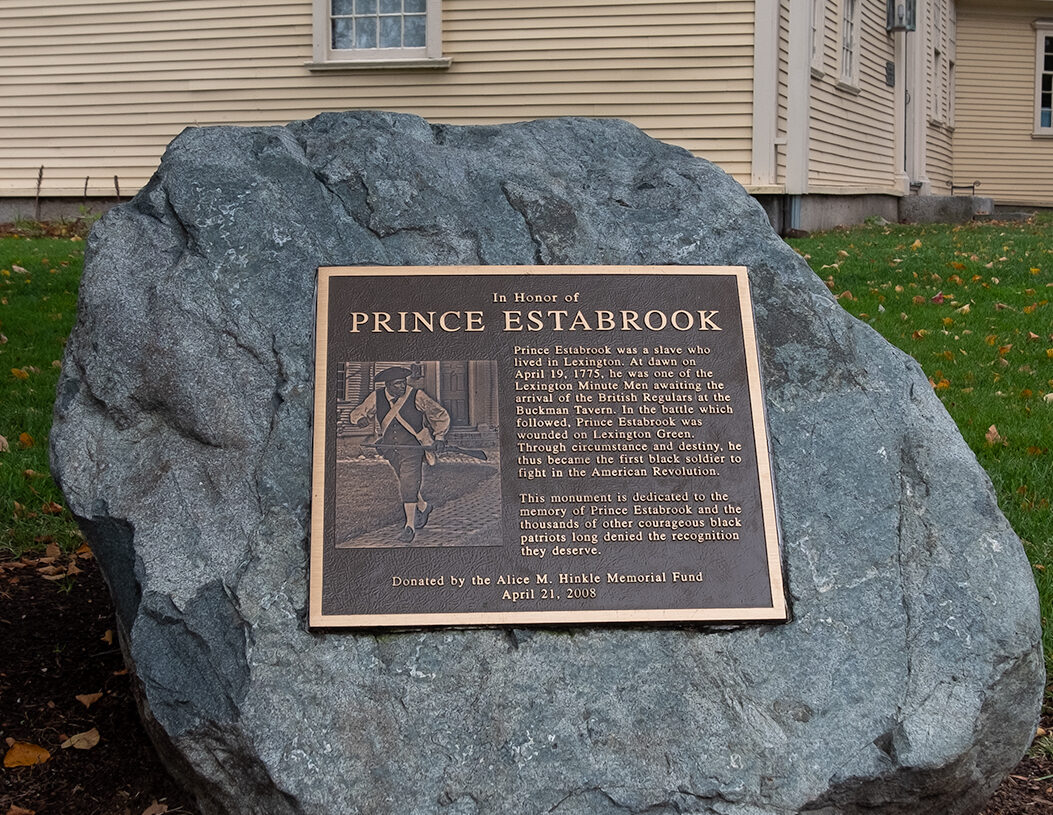
During the brief but pivotal skirmish on Lexington Green, Estabrook was struck in the shoulder by a musket ball. He survived the injury, and his wound has since been recorded by historians as one of the earliest documented instances of a Black soldier being wounded in the Revolutionary War.
The encounter marked the beginning of open conflict between colonial militia and British forces, and the events at what is now Lexington Green are widely regarded as the opening moments of the American Revolution.
Details of Estabrook’s life after the battle remain limited. Some accounts suggest he continued to serve in militia roles during the war, though surviving records are incomplete. He is later believed to have gained his freedom and lived the remainder of his life in Massachusetts.
Estabrook died in 1830 in Ashby, where he is also believed to be buried. While long overlooked in popular accounts of the Revolution, his story has gained renewed attention among historians examining the role of Black soldiers both enslaved and free in America’s war of independence.
He is now commemorated in Lexington, near Buckman Tavern and the town green, close to where he was wounded more than 250 years ago.
On this Independence Day, his story stands as a reminder that the struggle for liberty began in a nation still grappling with who that liberty included and who it did not.


